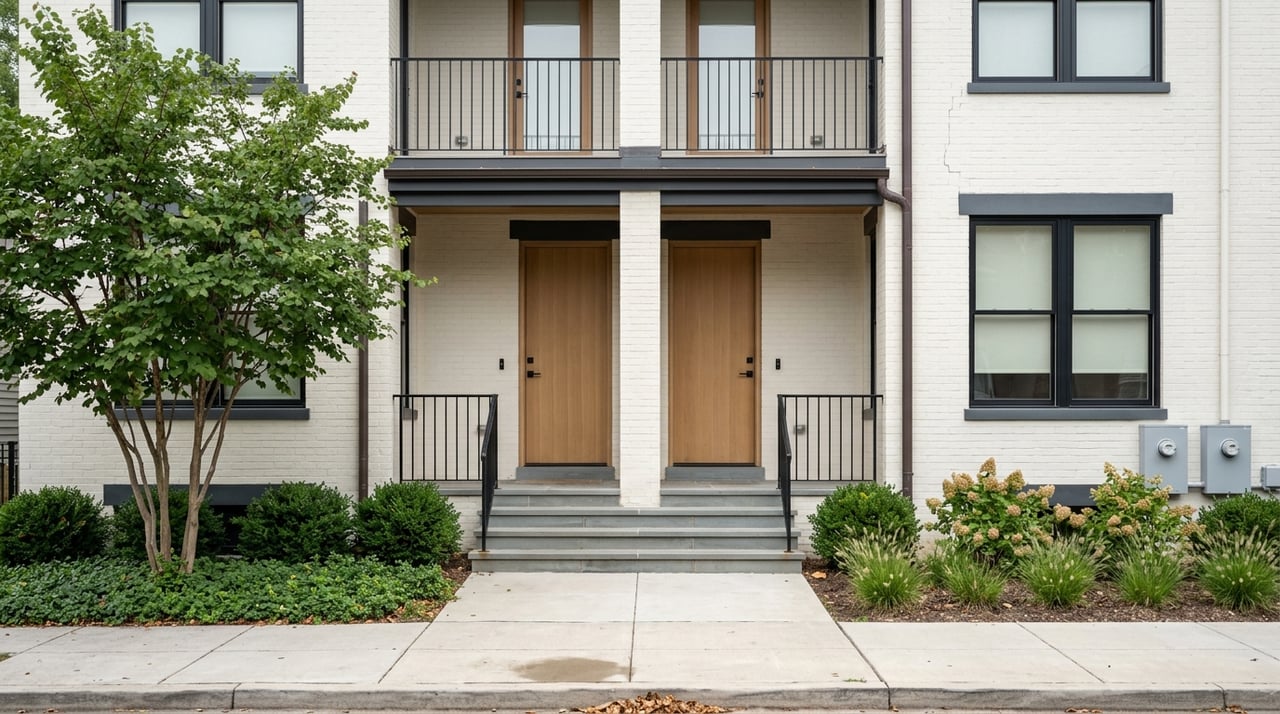
Thinking about lowering your monthly housing cost without sacrificing where you want to live? A duplex in Delaware County can help you do exactly that. By living in one unit and renting the other, you can turn a portion of your mortgage into an income stream. In this guide, you’ll see how house hacking with a duplex works in Delco, what financing options are available, what local rules to know, and how the math can shake out with real numbers. Let’s dive in.
What house hacking with a duplex means
House hacking is simple. You buy a legally permitted 2‑unit property, live in one unit, and rent the other. The rent you collect helps cover your mortgage and operating costs, and you build equity while you live more affordably. Fannie Mae’s small‑multifamily guidance and HUD’s FHA handbook both recognize this owner‑occupant model.
Who it fits best:
- First‑time buyers who want to reduce out‑of‑pocket housing costs while building equity.
- Buyers open to basic landlord tasks like leasing, maintenance coordination, and compliance.
- Owner‑occupants who value flexibility and long‑term wealth building.
Risks to consider include vacancy, repairs, and the time commitment of being a landlord. You also need to follow municipal rules for rental licensing and inspections.
Delaware County snapshot: prices and rents
Recent market snapshots show countywide median sale prices in roughly the low‑to‑mid $300k range, with many 2‑to‑4 unit listings also clustering in the low‑to‑mid $300k band. Rents vary by unit size and submarket, but many 2‑bedroom rentals land in a broad range around the mid‑$1,000s. Expect lower pricing in some western and southern pockets and higher pricing closer to transit‑served borough centers. Always confirm live comps for the exact street you are targeting.
Why this matters: your total housing cost depends on purchase price, interest rate, taxes, insurance, and the rent you can reliably achieve for the second unit.
Financing options that make it work
Loan program rules drive your down payment, how rent counts toward qualifying, and what reserves you must show. Get written pre‑approval from a lender experienced with 2‑unit owner‑occupied loans.
FHA for 2–4 units
- Allows owner‑occupied financing on duplexes with as little as 3.5% down for eligible borrowers.
- FHA has property standards, rental‑income documentation rules, and reserve tests for small multifamily. See HUD’s FHA Single Family Handbook for details. Review FHA policy basics.
Conventional (Fannie Mae)
- As of late 2023, Fannie Mae expanded options so many owner‑occupant 2‑unit purchases can go forward with as little as 5% down, subject to lender overlays and loan limits. See Fannie Mae’s update.
- Lenders often count a portion of projected rent from the non‑owner unit for qualifying when supported by leases or appraiser market rent.
VA for eligible veterans
- VA loans can finance 2–4 units if you live in one unit as your primary home.
- Lenders often verify reserves and use a percentage of contract or appraiser rent for qualifying. Check VA underwriting guidance.
Local assistance caveat
Delaware County’s Homeownership First down‑payment program has property eligibility rules. Many program versions exclude duplexes and renter‑occupied homes. If you hope to use assistance funds, confirm duplex eligibility with the program administrator early. See the county brochure.
The numbers: three quick scenarios
Below are conservative, high‑level illustrations using common local inputs. They are not quotes. Swap in a live listing price, current interest rate, your lender’s estimate for taxes/insurance, and real rental comps for the property.
Assumptions for all scenarios:
- Purchase price: $337,000 (illustrative multi‑family listing cluster)
- Down payment: 5% conventional owner‑occupant example
- Loan amount: $320,150
- Sample interest rate for illustration: 6.0%, 30‑year fixed
- Monthly principal & interest: $1,917
- Property tax estimate: $469/month based on county averages. See county tax overview
- Insurance estimate: $133/month. PA landlord insurance cost basics
- Maintenance reserve: $281/month (about 1% of price per year)
- Vacancy reserve: 5% of rent
- Optional property management: 8% of rent if you do not self‑manage
Baseline owner costs before rent: P&I $1,917 + tax $469 + insurance $133 + maintenance $281 = $2,800/month.
Scenario A: Lower rent case
- Second‑unit rent: $1,500
- Vacancy reserve (5%): $75
- Owner‑managed total outflow: $2,800 + $75 = $2,875
- Net owner housing cost: $2,875 − $1,500 = $1,375/month
- With third‑party management (8% = $120): $2,875 + $120 = $2,995 total → net $1,495/month
Scenario B: Mid rent case
- Second‑unit rent: $1,700
- Vacancy reserve (5%): $85
- Owner‑managed total outflow: $2,800 + $85 = $2,885
- Net owner housing cost: $2,885 − $1,700 = $1,185/month
- With third‑party management (8% = $136): $2,885 + $136 = $3,021 total → net $1,321/month
Scenario C: Higher rent case
- Second‑unit rent: $1,900
- Vacancy reserve (5%): $95
- Owner‑managed total outflow: $2,800 + $95 = $2,895
- Net owner housing cost: $2,895 − $1,900 = $995/month
- With third‑party management (8% = $152): $2,895 + $152 = $3,047 total → net $1,147/month
What changes the results most:
- Purchase price and interest rate.
- Local taxes and insurance quotes.
- Actual rent achievable for the second unit.
- Whether you self‑manage or hire a property manager.
Local rules and landlord basics in Delco
Before you buy, confirm that the property is a legal duplex and understand the municipality’s rental rules.
- Rental registration, U&O, and inspections. Many Delaware County boroughs and townships require rental licensing or inspections. Confirm the specific rules for the property’s municipality and budget for any required repairs. See regional updates.
- Security deposits and returns. Pennsylvania law caps deposits and sets rules on escrow and timelines for returning deposits. Follow state law and any local overlays. Read the PA Attorney General’s guide.
- Lead safety and habitability. Many Delco homes predate 1978. Federal law requires lead disclosure forms and the EPA booklet for tenants. Maintain safe‑work practices and meet code standards. Download the EPA lead booklet.
- Eviction process and notices. Pennsylvania sets timelines and procedures. Mistakes can be costly. Consider consulting counsel and always document notices.
Taxes and bookkeeping: what to ask your CPA
Owning a duplex you occupy is part home, part rental. Keep clean records and ask a tax professional to set up your files from day one.
- Report rental income and expenses on Schedule E. Deduct eligible costs like mortgage interest, property taxes, insurance, repairs, maintenance, and management fees. See IRS Publication 527.
- Depreciation. You generally depreciate the rental portion of the building (not land) over 27.5 years. Ask your CPA about basis allocation between units and land vs. building.
- Selling later. Primary residence exclusions and depreciation recapture have specific rules when part of the property is a rental. Plan ahead with a pro.
Who a Delco duplex is best for
A Delaware County duplex can be a strong fit if you want to:
- Cut your housing cost while you build equity.
- Start small as a landlord with one rental unit.
- Use flexible financing with lower down payments.
It may not be right if you prefer a fully hands‑off lifestyle or if your financing plan depends on a down‑payment assistance program that excludes duplexes. When in doubt, talk through tradeoffs with your lender and a local advisor.
Step‑by‑step next moves
- Get pre‑approved with a lender who does 2‑unit owner‑occupied loans and can quote FHA, VA, and conventional rules. Fannie Mae’s update is a helpful reference point.
- Pull live comps for both sale prices and rents for your target blocks. Focus on unit size, condition, and utilities.
- Confirm the property’s legal unit status, rental registration, U&O, and inspection requirements with the municipality. Check regional code updates.
- Hire a home inspector experienced with multi‑unit systems, separate utilities, and life‑safety items.
- Set up a simple pro forma with your lender’s tax and insurance estimates, then test low, mid, and high rent cases.
- If you plan to use down‑payment assistance, verify duplex eligibility with the program administrator. Review the Delco program brochure.
Ready to explore duplex options or run the numbers on a property you like? Schedule a consultation with the team at Philly Home Advisors | Philly CRE Advisors to map your strategy and see on‑market and off‑market opportunities.
FAQs
Can I use an FHA loan to buy a Delaware County duplex?
- Yes, if you plan to live in one unit as your primary residence. FHA supports 2–4 unit owner‑occupied purchases, with program rules on property standards and rental‑income documentation.
Will the rent from the second unit cover my entire mortgage?
- It can reduce a large portion of your monthly cost, and in some cases come close to covering it, but results depend on price, rate, taxes, insurance, maintenance, and the rent you achieve.
Are county down‑payment programs available for duplexes in Delco?
- Often no. Delaware County’s Homeownership First program has versions that exclude duplexes and renter‑occupied homes. Confirm eligibility with the program administrator early.
What local permits or inspections should I check before closing on a duplex?
- Verify the property is a legal duplex, confirm rental registration and U&O requirements, and review inspection schedules for the specific township or borough before you buy.
How do lenders count rental income when I qualify for a duplex loan?
- Many programs allow a portion of projected rent from the non‑owner unit to count toward qualifying income when supported by leases or appraiser market rent, subject to program rules and lender overlays.